
S04E01 – The Power of Coaching: Creating Positive Workplaces – Faten El Ayache

MHAE is a UAE based mental health and wellness initiative, with the aim to create awareness and provide a safe space as well as access to information and resources. Follow us on our Instagram and check out our website.
https://mentalhealth.ae/
https://www.instagram.com/mentalhealthae/
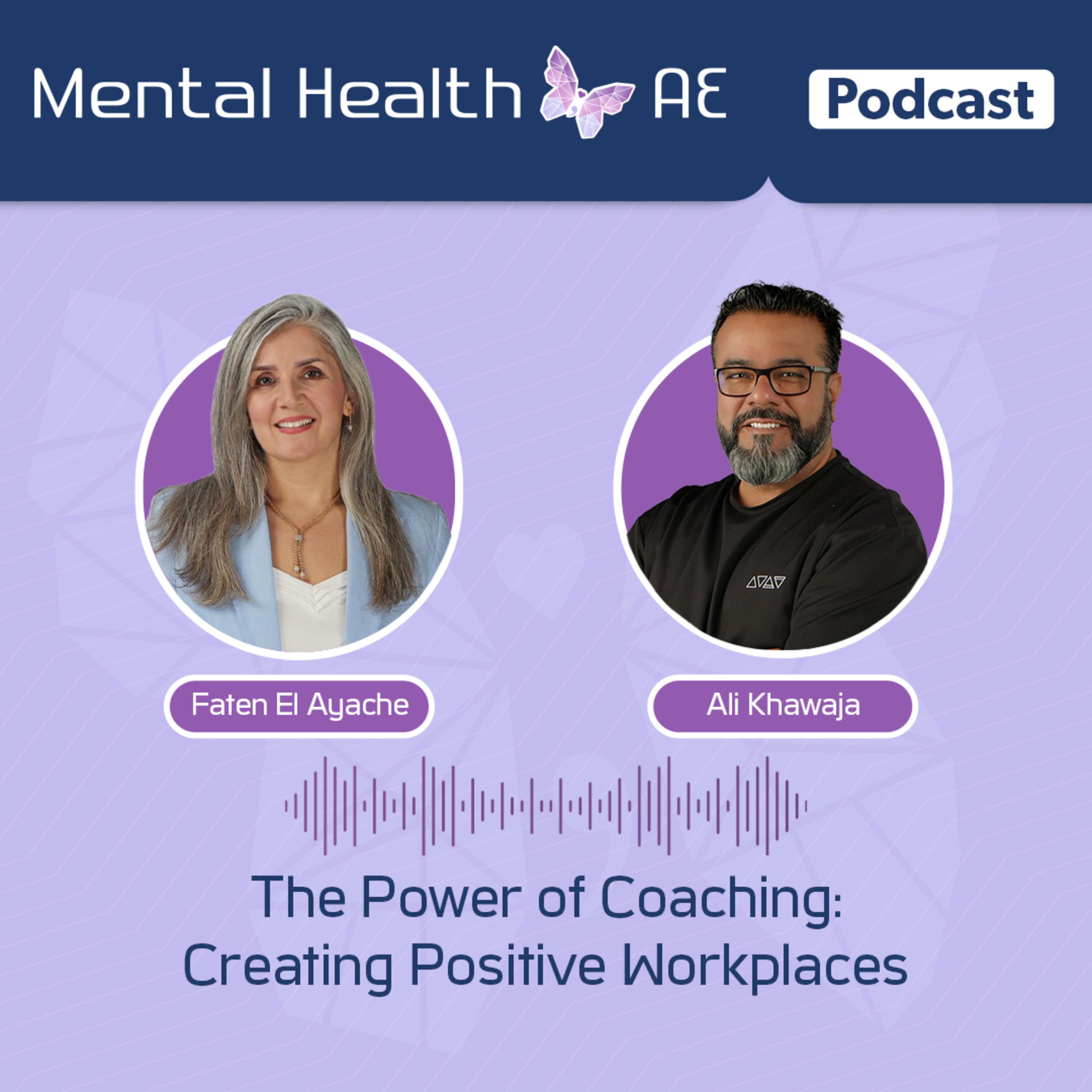
In the Season 4 premiere, Ali Khawaja is joined by Faten El Ayache, founder of Brightfields, for a deep conversation on coaching, leadership, and creating psychologically safe workplaces.
Faten shares her personal journey from pharmacy and corporate sales into learning and development, positive psychology, and coaching. Driven by a desire to make meaningful impact, she founded Brightfields with the mission of helping individuals and organizations thrive through coaching conversations.
The episode explores what coaching truly is and how it differs from therapy or consulting. Coaching is described as a goal-oriented partnership that helps individuals unlock their own insights, overcome blind spots, and reconnect with their inner resources. Both Ali and Faten emphasize that coaching works best for people who are willing to be vulnerable, unlearn conditioned beliefs, and step outside their comfort zones.
A major highlight is Faten’s SOS Leadership Model, which reframes leadership through three core lenses: creating psychological safety through connection, taking ownership of one’s internal triggers and responses, and recognizing every individual as a “star” with unique strengths. The discussion connects these leadership principles to mental health, innovation, burnout, and loneliness at the top.
The conversation closes with reflections on workplace toxicity, stigma around mental health, and the urgent need for more human-centered leadership. The episode reinforces the idea that coaching is not a luxury, but a critical tool for healthier leaders, stronger teams, and more sustainable organizations.
#Coaching #LeadershipDevelopment #PositiveWorkplaces #ExecutiveCoaching #PsychologicalSafety #WorkplaceCulture #MentalHealthAtWork #HumanCenteredLeadership #PersonalGrowth
Podcasters-
https://www.instagram.com/talktokhawaja/
https://www.instagram.com/faten_elayache/
MHAE Website | https://www.mentalhealth.ae
MHAE Instagram | https://www.instagram.com/mentalhealthae








Summary
In the Season 4 premiere, Ali Khawaja is joined by Faten El Ayache, founder of Brightfields, for a deep conversation on coaching, leadership, and creating psychologically safe workplaces.
Faten shares her personal journey from pharmacy and corporate sales into learning and development, positive psychology, and coaching. Driven by a desire to make meaningful impact, she founded Brightfields with the mission of helping individuals and organizations thrive through coaching conversations.
The episode explores what coaching truly is and how it differs from therapy or consulting. Coaching is described as a goal-oriented partnership that helps individuals unlock their own insights, overcome blind spots, and reconnect with their inner resources. Both Ali and Faten emphasize that coaching works best for people who are willing to be vulnerable, unlearn conditioned beliefs, and step outside their comfort zones.
A major highlight is Faten’s SOS Leadership Model, which reframes leadership through three core lenses: creating psychological safety through connection, taking ownership of one’s internal triggers and responses, and recognizing every individual as a “star” with unique strengths. The discussion connects these leadership principles to mental health, innovation, burnout, and loneliness at the top.
The conversation closes with reflections on workplace toxicity, stigma around mental health, and the urgent need for more human-centered leadership. The episode reinforces the idea that coaching is not a luxury, but a critical tool for healthier leaders, stronger teams, and more sustainable organizations.
#Coaching #LeadershipDevelopment #PositiveWorkplaces #ExecutiveCoaching #PsychologicalSafety #WorkplaceCulture #MentalHealthAtWork #HumanCenteredLeadership #PersonalGrowth
Podcasters-
Ali Khawaja | https://alikhawaja.com
Faten El Ayache | https://www.instagram.com/faten_elayache/
MHAE Website | https://www.mentalhealth.ae
MHAE Instagram | https://www.instagram.com/mentalhealthae
Outline
0:00 – Season 4 kickoff & welcome
– Ali opens the new season and reflects on returning after a long break
– Introduction to the theme of coaching and positive workplaces
0:48 – Meet Faten El Ayache
– Faten introduces herself and Brightfields
– Mission: creating positive workplaces through coaching conversations
4:47 – From pharmacy to coaching
– Faten shares her career pivot and personal reflections
– Finding purpose, impact, and alignment with values
7:40 – What coaching really is
– Coaching vs therapy and advice-giving
– Unlocking inner resources through powerful questions
11:45 – Perspective, blind spots, and listening
– Why people already have the answers they need
– The role of listening and awareness in coaching
14:48 – Who coaching is (and isn’t) for
– Growth mindset, vulnerability, and courage
– Why coaching doesn’t work without willingness to unlearn
24:45 – The SOS Leadership Model
– Safety, Ownership, and Seeing Everyone as a Star
– Rethinking leadership with humanity at the center
29:05 – Psychological safety and innovation
– Fear, failure, and silence in organizations
– Why innovation requires safe environments
41:37 – Mental health, burnout, and loneliness
– Toxic work cultures and emotional stress
– Loneliness at the top and the cost of ignoring wellbeing
48:20 – Closing reflections and what’s next
– Stigma, shared struggles, and the need for coaching
– Future work, books,
Transcript
Ali 0:00
Foreign. Welcome back, everybody. Ali here. Yes, yes, I know, I disappeared. My bad. I was working on a wonderful project. It took me a year. I wrapped it up just end of November and now we’re back in our studio. It’s a different place, as you can see. We’re between studios actually. So you will hopefully see a few more episodes of this format and then we’ll have a much nicer format Nonetheless, I have an amazing lineup of guests for this season. I’m going to ask my guest today to introduce herself in just a minute. But as usual, you know, don’t forget to follow, subscribe and you know, wherever all those buttons are. Fantastic. Yes.
Faten 0:48
Thank you, Ali, for having me. Am I the first one in the season?
Ali 0:52
Yes, for the new season. You’re a first record.
Faten 0:54
Interesting. Okay, so let’s see how it goes. I’m Faten Ayash. I’m the founder and managing partner of Brightfields. We have offices in Qatar and UAE Dubai. And what we do at Brightfields, or our mission at Brightfields is to create positive workplaces through coaching conversations.
Ali 1:17
That’s fantastic. I myself have an ICF certified coach. Have been one for eight, 10ish years now.
Faten 1:25
Nice.
Ali 1:25
I did a very interesting pivot about six years ago that got gotten me a little bit more lean towards ADHD focused clients. So it’s been a, it’s been a wonderful journey. We’ll definitely dig more into it. Give me a little bit of your background before, before you got to where you are today. Where have you been?
Faten 1:42
Yes. Okay. So I started my career as a pharmacist because I’ve got two bachelor’s degrees, one in chemistry and one in pharmacy. I worked in pharmaceutical sales at Sanufi for, for seven years. And then I went into realizing that, that not what I really want. There was something missing. So I always felt there was a doctor between me and the patient. I’m not making the impact I would like to make. And as a teenager, I don’t know how, don’t ask me how, but I wrote once that I want to be an effective member in the society. I didn’t know what that means like, or what that meant at that time. So I felt there was something missing. I’m not making that impact. I got my two kids now they are 15 and 14. Thank you. So after I got my son, I have a daughter and a son. After I got my son who’s the second child, I took my maternity and I started reflecting on what is it I want to do next in my life and like, what sparks joy in me. And that’s when I realized it is in a training setting. Like at Sanufi, they used to send us to a lot of professional development courses. So I would be like all eyes and ears to the trainer. So I was like, okay, I can be a trainer. So I found a course that had like a university. It was the College of North Atlantic in Qatar. It’s like a Canadian branch campus in Qatar. And they had evening classes. So I would be putting the kids to sleep and go to these evening classes. And I did. My first module was in L and D because I wanted to learn how to be a trainer. And then they said, fatin, if you take the whole 10 modules, you will get a certificate in HR. I was like, okay, I want anything to add to my. Actually to change from my cv, because all my CV is pure technical, purely, you know. So I did that, and then I did my CIPD in learning and development and I became a freelance trainer, a certified trainer, freelance first at Qatar University. And as you notice, I keep on bringing Qatar because that’s where I lived for 16 years before moving to Dubai almost four years ago. And there I went into training and then went into career development services at the universities at Qatar University and Carnegie Mellon University. And there was like, that was amazing shift. And that when I felt I was making an impact, I’m being that effective member because I’m helping someone, like, get into the real world. And there where was. I got my master’s in positive psychology and coaching psychology and my coaching certification from ICF and growing on that field right now. Applying to my MCC very soon. Hopefully to the Master Certified coach. Yeah.
Ali 4:47
Wow. Congratulations on all the accomplishments. But I think more so, I really appreciate you sharing the journey. A lot of people who, you know, start out life, they, you know, get done with college, they find a job, and then all of a sudden they find themselves in a career path that is not their own, but has been dictated by people around them.
Faten 5:07
Exactly.
Ali 5:07
And they never pause to reflect, to come back and say, is this really what I want? Is this the impact that I want to create? Is this the legacy I want to leave behind? So I’m, I’m really glad to hear that, that you got that opportunity and then you made that pivot and you made that shift. Wonderful. That’s absolutely wonderful. Now tell me more, more about this wonderful organization that you’ve created, Brightfields.
Faten 5:32
So Brightfields came as a calling, if you want, because I was like, carnegie Mellon is an amazing place. The environment, the work Culture, everything in it felt really good. Salary wise, benefits wise, everything was wonderful. And at the same time, I felt like coaching is my calling. And to me, there’s nothing more gratifying in this world than seeing someone believe in themselves again because life crushes us. And nothing more gratifying, I can’t put it in any other words, than seeing that. So I was like, I found my calling. I want to do this to the rest of my life. I really believe that the future is coaching, and I want to just do that. So I took that leap of faith and I primed myself. Like, I really worked on doing that because it’s not easy, you know, staying in your comfort zone when the salary is there, the benefits are there, is, you know, appealing. So I had to work on myself with my coach a lot to prime myself and say, I can do it. And that’s what I did. I started Brightfields, and we’re expanding. There’s real need of future is coaching. And more and more people are realizing the importance of having a coach in their life. Just like, you know, you have a personal trainer to fix your physical fitness. It’s. It’s that mental fitness that you can get with a coach. And. And I’m seeing that, like, the. The request for proposals for. For the team I have now is like, showering every single day. We. We’ve got some. Some RFPs to submit for executive coaching or. Or leadership development or. Yeah, or coach training. That’s what we do. The third thing, I like that you.
Ali 7:40
Mentioned that things are expanding and things are growing, and I think that’s got a lot to do with awareness. I remember the early days when I got into coaching for. For me, it was just like, oh, this is very interesting. Let me see what it is. And. And Linda, who I trained under, was amazing. Absolutely amazing. So she was like, ali, you need to try this. And I’m like, I mean, I’ve been teaching for well over a decade. At that point, like, in my head, I was like, what. What are you gonna tell me that’s new? And then she’s so smart. She’s like, why don’t you come for just 45 minutes? You know, we’re starting this training out. If you don’t like it, you can leave. I’m like, okay. So that 45 minutes became the day, became three weeks, became three months, became credentialing, became an entire pivot into coaching. And, you know, there’s. There’s. Every time I talk to a coach, we always reflect on things that we found about ourselves that were interesting. I always thought I was a good listener until I, until I was taught what listening is. And then I was like, wait a second, I don’t know how to listen. What’s going on? So it’s been an adventure, I think from my perspective as a coach. But a lot of awareness still is lacking. Yes, it’s needed and it’s lacking. And I think a lot of it has to do with people not understanding what a coach is. I’m sure you get this question all the time. How would you explain what the difference between let’s say a coach or a therapist or a psychiatrist is?
Faten 9:10
Yeah, that’s beautiful question. So as how I define coaching is, you know, in a nutshell, it’s a deep conversation with a goal to be achieved. So it’s not like you’re just venting with your friend. No, you have a goal that you would like to achieve and just by asking thought provoking questions that will literally make you think and that’s what the coach would do, then that’s what you will get, you know, the realization, the aha moments as you know, we call them. So that’s in a nutshell. The accurate, the bigger definition of ICF is about partnering with the client. So there’s be that partnership between me and my clients and you and your clients to unlock their potential. And what do I mean by unlocking their potential? I’m talking to you, you know that maybe your audience, it’s definite, definitely believing that every individual is very resourceful, very creative and whole. So they’ve got all the resources within themselves and our job is just to pull that out. And I always say this, correct me if I’m wrong. How many times we face things and we say like, oh my God, I don’t know what to do. And then when this thing happens, you always find ways. So that confirms that’s the basis of coaching, that this is the starting point. Everyone is resourceful, creative and whole. By asking, asking questions, thought provoking questions, we can create a different narrative, a different thing that our clients will see to achieve their personal or professional goals. And how I also related to them is that when you are swimming in a beach, like why do we need coaches as coaches? I have my coach, I have my mentor, I have my supervisor. Why do I need that? Because when I’m swimming in my daily life in that beach, I’m not seeing the whole beach, but if someone’s sitting on the shore, then that’s when they can see the whole thing. And each one of Us has blind spots. Like, there’s this car that’s exactly beside me, behind me here. It sees everything about me, but I have no idea it exists simply because it’s in my blind spot. So we’ve all got blind spots, and that’s what a coach would help you to do. And how I define coaching, it’s that process where, you know, we. We unlock potential in ourselves that we didn’t know existed.
Ali 11:45
Wonderful, wonderful. Very spot on. Thank you for sharing. You know, and, you know, this is a question I always get every time I’m working with a new client, and I always allocate a big chunk of time for the first onboarding meeting to, you know, go through this in a lot of detail. And a lot of clients initially, you know, kind of find themselves a little reserved, like. But what do you mean you’re not going to solve my problem? Yes, you know, and. And exactly the example you gave. It’s a matter of the difference of one’s own perception versus other people’s perspective. The person on the beach has a broader view than you swimming in the sea at the moment. Right. So it’s. It’s about unlocking other perspectives on the same situation and not necessarily providing any additional context to it. And people find it really shocking the first time they hit that aha moment, you know, like, wait a second, I had my solution.
Faten 12:41
I’m like, yeah, and exactly what you did. They look up and like, oh, my God. Why? Why? I didn’t think about that. I had that. Yeah. And simply because I think we’ve been raised to believe that I need Hali’s advice, I don’t know alone. And how many times you face that. And clients would tell you, I don’t know.
Ali 13:00
Yeah.
Faten 13:01
And then if they stayed with this, I don’t know, a bit longer, all the things start popping up in their eyes, and that’s when they realize that they’ve got the potential. So. So, yeah, absolutely. Because if we start giving advice, we are, you know, just demolishing all what we said about how the resourceful people are. So who am I to give advice? I’m the expert coach, but they are the experts in their lives and.
Ali 13:30
Exactly.
Faten 13:31
So, yeah.
Ali 13:32
And, you know, that’s another very interesting realization that clients get is when I tell them, I’m like, look, you’re the only person who’s the expert in your life because you’re the only one who’s lived with you 24 7.
Faten 13:44
Exactly.
Ali 13:45
Right. I can only help you see things in a different way. And, and it Takes some, sometimes it takes a while to get things moving, you know, you know, you know what I’m talking about. But once things get moving, things get very enlightening. You know, things start to connect, things start to make sense. All the puzzle pieces seem to align, all the dots connect with lines. And it’s, it’s very wonderful to observe as, as a coach that, you know, this is, you know, from a personal perspective, that’s the impact you’re having, but just the fact that somebody’s life is, you know, a little bit better.
Faten 14:21
As I said, there’s nothing more gratifying than this. There’s nothing more. That’s the impact that we always like. That’s the impact that wakes me up in the morning. Right.
Ali 14:30
Amazing. Amazing. No, I hear you. I hear you 100 on this. And you know, everything you said, I kind of already know because again, all the coaches know what we’re talking about. But this is great for people who have not experienced coaching. And I’m going to tangent a tiny bit and then I want to circle back to Brightfields again.
Faten 14:47
Yeah.
Ali 14:48
Who is coaching good for?
Faten 14:50
Okay, that’s a beautiful question. I didn’t know I’m interviewing a coach. I’m loving the questions. So who is coaching good for? It’s for anyone and everyone who is really ready to step out of their comfort zone. I always say this. Coaching is not for the faint hearted. When you are removing those layers of conditioning and how you are taught or raised or believed that leadership is, or life is or whatever, it’s not easy to remute it. It needs lots of courage. So coaching is for those who really have the courage to unlearn and are willing to step out of their comfort zone because growth is really uncomfortable. It’s very, very vulnerable. And I always like to use this analogy that I learned from Gabor Mati. He says when a crab wants to grow, it has to break its shell and create a new shell. And in that moment, it is at its most vulnerable spot and it hides under a rock. Same thing for a plant. The node that would make that plant a bit longer and bigger. It’s very, very delicate. So people who are willing to sit with that discomfort and to unlearn and to be vulnerable. Coaching is for them. Coaching is not for the people who would say, I know it all, like, what do I have to learn? Like yesterday the team reached, like came back to me and they said they had an info session with a client who was filled a form for that coach training program that we have and they Schedule an info session to see if he’s the right fit or not. And he was telling them, the lady, my colleague said he was so arrogant, fat and he was so arrogant. It’s like he’s the manager and he knows it all. So this is not for this. Coaching is not for this guy.
Ali 16:59
Yeah, no, no, I hear you and you’re 100% right on this. And it’s important to understand in which situations coaching is most productive. And I think the underlining or the foundation not underlying the foundational thing that needs to happen is a growth mindset.
Faten 17:18
Yes.
Ali 17:18
You cannot grow without being vulnerable.
Faten 17:21
Yes.
Ali 17:22
You cannot grow without admitting that you need growth. Yes. And this is the one that always is kind of like a kick in the head is you cannot grow without unlearning things that you, in your entire life have been conditioned to believe are true.
Faten 17:36
Yes.
Ali 17:38
You know, we grow up hearing so much, and if it’s repeated long enough, it becomes the truth that we accept. You know, and this is where you see a lot of clients reflecting back, not just, not just in the personal coaching or the, you know, but in the corporate also. They will reflect back to what their, their ethics and ethos and principles were as they were taught by their parents when they were young kids.
Faten 18:05
Exactly.
Ali 18:06
And then you. You see them kind of like almost sit back in their chair, you know, talking about body language. They’ll sit back in the chair and then they’ll have this little moment of, oh, my goodness, have I understood this wrong my whole life? So being vulnerable to that level of uncomfort, I think is a very, very critical prerequisite.
Faten 18:29
Absolutely.
Ali 18:30
To being not just coachable, but to really get the most out of a coaching experience.
Faten 18:36
Yes.
Ali 18:37
So, yeah, I echo, I reflect everything you, you said. I agree with you. 100. It’s.
Faten 18:42
I’m glad to hear that.
Ali 18:43
It’s. It’s like deja vu with all my clients. We’re hearing all the same stuff.
Faten 18:47
Exactly. You know, I, I just want here to add something in my executive coaching programs. Let’s say I’m coaching 10 C suite executives in. In one organization. I am seeing like a 70% success rate. The 30% are executives who are at the top of the pyramid. They are C suite. Yet not a single bit of transformation is seen during this whole year simply because they are not willing to unlearn, to be vulnerable in front of me, to go deep. And yeah, so, yeah, I see it. And I have to be transparent that I’m not that magic wand. I don’t have that Magic wand that I will transform your team. It’s. I’m seeing a 70% success, which is excellent. But I have 3 out of 10 always not opening up, not seeing any transformation. Their team is not seeing any transformation. Their 360 after the program is still the same.
Ali 19:54
Yeah. So, yeah, no, no, I hear you on this. I had a. Not had a half. I have one of my clients. He’s. He’s very successful. He’s like fourth, fifth generation running family business. Without getting into a lot of details. I remember our first few sessions were very interesting. He would always, you know, use his corporate KPIs to measure his success. And I, I caught him out on that a couple of times. And then, you know, he had this look of confusion. And then at one point he’s like, holly, why do you keep asking me why I measure my success with my company’s success? It’s one and the same. And then I was like, I have an interesting exercise for you. Take out a big sheet of paper. I want you to pick. Put a circle, put your name on it.
Faten 20:43
Yeah.
Ali 20:44
Then I want you to draw a line and put another circle and, and make those circles and then further circles about the areas of life that are most important to you. So, you know, I was just watching him. He drew a circle. You drew a line down a circle, said family. And then from his family, he talked about his relationship with his wife, with his kids, with his parents, you know, and then, then he went to his self growth and learning. And in that, he had fitness, he had other things. And then he had one company and then another company and then another company. And then he filled out that sheet. And I said, okay, let’s ignore the peripheral circles. Let’s just go one layer out from your name to one layer out of the bubbles that you’ve created. I want you to break up, up all of these bubbles into percentage of importance.
Faten 21:34
Beautiful.
Ali 21:34
And then he’s. Then he’s like, kind of sat back because I gave him a corporate. Yeah, right. I’m like, here, here, put some numbers on it. Right. And then he’s like, well, you know, family is the most important to me. And then, you know, my, my wife and my kid and my this and this and this. And then, you know, my. I got. I need to take care of my health and my growth. And, you know, all this and the element of spirituality and religion was there. And then, you know, the work and the friends and the fun. And I said, now that you’ve written numbers on it, take a different color Marker. And now I want you to write the percentage of time that you spend on each.
Faten 22:10
And that was shocking.
Ali 22:11
It was backwards.
Faten 22:12
Yeah, exactly.
Ali 22:13
And you know this. I don’t know. I’m preaching to the choir. You know this. It was backwards. And that’s when he kind of went, whoa. And then I was like, bro, now you understand why your KPIs are not your KPIs. And then that’s when he understood, oh, wait a second. I’ve been measuring corporate success as my success. I’m like, I’m not saying that corporate success isn’t your success, but it’s not all of your success. And then, you know, then. Then I think, as we say, the journey really started.
Faten 22:44
Yes.
Ali 22:45
And then he spent a great deal of time. You know, when I tell them, I’m like, you need to adjust the balance by a counterbalance.
Faten 22:53
Yeah. Recalibrate.
Ali 22:55
So he. He. I remember a few more weeks in, He. He call, and he’s just laughing, and I’m like, what’s going on? Everything all right? He’s like, man, I don’t even know where to begin. I’m like, tell me what happened. He goes, my little alarm went off. He’s also adhd, so he had, like, three alarms. So he doesn’t miss our meeting. He goes, my first alarm went off, and then my wife jumped. Is that your meeting with Coach Ali? He’s like, yeah, okay. Don’t be late. You make sure you don’t miss any of his meetings. They are very, very important. And then he just looked at her. He’s like, this is the first time in our 20 some years of marriage. You told me to make sure I attend a meeting. What’s going on? And she goes, I don’t know what he said to you, but this is the first time I’m seeing in 20 years our marriage graph improving and the graph turning upwards. The line is turning upwards rather than going downwards. And he goes, man, my wife loves you. I’m like, thank you. Thank you very much. I’m like, as much as I would like to take credit, I’d like, like, all jokes aside, I’m like, dude, it’s your hard work. It’s. You’re the one who took that risk. It’s. You’re the one who was vulnerable. You’re the one who decided to unlearn and then learn and then step into the space that should have been your space to begin with. So there. There’s. There’s a lot, I think, that we can continue to unpack about the Value that coaching brings and the impact that it creates. But circling back to the question I actually had, which was, who is coaching for? And I like how you didn’t say it’s for this age group or this gender or this executive or this personal. It’s for everybody who’s ready. Yes. I like it. I like it. I’ve noticed you brought in a little book.
Faten 24:35
Yeah.
Ali 24:36
Are you bringing me homework? I’m the one doing homework. What’s going on?
Faten 24:39
These are notebooks, so you can fill them. Tell me about actually working on a workbook for that.
Ali 24:44
Excellent.
Faten 24:45
So this is the. The Brightfields SOS leadership model that live recently launched. Yes. Sos yes. And just like, you know, the universal call for help, this was really born out of urgency. Urgency to reimagine leadership in a world where people do not feel heard, seen, or understood. So as cliche as it sounds, but I realized that really, we need to unlearn the myths that hold us back. The myths that hold us back from leading with humanity and keeping the human at the center of. So I looked at leadership from three main models, from three main angles. I mean, lenses. And that’s how I came with SOS So I looked at leadership as the environment we create. I looked at the self we lead and the people we touch. So. And each one of, like, each word from this. Each letter from this acronym stands for a different lens. So the safe safety is the environment. Psychological safety now is a buzzword. It’s in every leadership program, every HR conversation. Keep on hearing about psychological safety. And I always question, double click on, like, really? Are you really creating psychological safe workplaces? Because what I learned from a nervous system point of view from Stephen Porges, you know, the polyvagal theory, is that safety is not the absence of threat. Safety is the presence of connection. So are you really connecting with the people? Because in the office, there are no threats. There’s no. There’s no. We’re not in a war zone. The. The cables. I think if a health and safety professional comes to this room, they will be. They will be crying because there might. There might be some, like, workplace injuries because of the wires or something like that. And again, thank you. That space. Yeah. But I mean, from. In. In organizations, they make sure that all wires are plugged. We’re safe. We’re not in a war zone. There’s security in the. In the, in the entrance of the building, all of that, yet people are feeling safe. No, because the answer is, like, the threat is not physical. The threat is. Is emotional. That Fear of failure, that fear of judgment. And this fear is making sure that, that all our great ideas are silenced and thus located in the graveyard. Like how many times I hear it, and I’m sure you hear it a lot in your coaching sessions that I’ve had a great idea and I didn’t share it. And then few years down the line they’re using exactly the same thing that I had in my head. Right? So this fear is because of not feeling safe. So if you want to connect, it’s not like a slogan or a policy. It’s that culture. And it comes in. We can create safety through connection. In moments when a leader actually really looks at the person behind the role. When a leader actually learns how to listen. You thought you knew how to listen. I thought I was a good listener until I realized that I have a lot to do and that’s what I’ve been learning through coaching. So when a leader listens instead of dismisses, how many times we hear that from leaders? I don’t have time for that. Fatim. Right? Like seriously, when you get them back, every single time coming back to you, you have time for that, but you don’t have time to really listen and look at what the real core issue is. That’s really sad. Or when a leader, for example, responds to, to bad news with a curiosity versus blaming. You know, the blame culture is massive. Why I say Brightfields is on our mission to create positive workplaces because the toxicity is really massive. So that’s how we create safety. Which is the first s to expand.
Ali 29:05
Onto what you talked about. Safety. This is a massive issue in corporate and not just from the perspective of the individual, but from the perspective of the organization. So you know, I, I do a lot of consultancy and advisory also and I’ve walked into countless organizations where they’re preaching innovation, you know, and I, and I walk in and I, yeah, and, and I’m like, okay, let me show what you got. Oh, you know, we are very pro innovation. We like innovation. Here’s a poster that says innovation. Here’s our emailer that we send out to our staff to be innovative. I’m like, what’s your, what’s your policy on failure? Huh? What do you mean? I’m like, how many people have failed? What do you mean? I’m like, if you, and not just you as that organization but anyone claims that they have been innovative and they have not experienced failure, they haven’t been innovative.
Faten 29:53
Hundred percent.
Ali 29:54
Which by definition means that unless you allow for failure, unless you allow for A space, a safe space for that failure. You will never experience innovation in any organization at any level.
Faten 30:06
100%. Because innovation is fungible as well.
Ali 30:10
They won’t share the idea. No, because they’ll be worried that let alone them being talked down to, they’ll be like, if the idea doesn’t work, failed, will I even have a job tomorrow?
Faten 30:20
Exactly.
Ali 30:20
And if you look at organizations that have successful innovation and you really look at what they’re doing, they’re not promoting innovation, they’re not marketing innovation. They’re creating an environment where they have allowance for failure, where it’s acceptable, it’s not frowned upon, you’re not looked down upon, you’re not in trouble, you’re not getting fired, you’re not getting a demotion. And we’re seeing a lot of, even, even in ue a lot of governmental level organizations adapting this. They’re like, listen, if you have a brilliant idea, take two months from your job. We will hold your position, we will give you a little bit of money. Try it.
Faten 30:56
Yes.
Ali 30:57
If it works, excellent. If it doesn’t work, no problem. Go back to your job, continue as you work and then come back again.
Faten 31:04
Yes.
Ali 31:05
Wait, what do you mean if it doesn’t work? I’m not burned for life. I can still come back and try again. Yes, try as much as you like. So it. Without, without creating that space. And, and again, when you, when you and I like how the first one is safety because I was like brilliant. Because without creating that safe space and safe space, as you said, 100% I agree with you. It’s not about the absence of negative.
Faten 31:27
Yes.
Ali 31:28
It needs to be the presence of positive.
Faten 31:30
Yes.
Ali 31:30
Neutral is not safe.
Faten 31:32
Yes, exactly. Exactly. Really are talking about innovation. It’s all, it’s always about failure and celebrating those mistakes. Because even us as individuals forget about the corporates, we learn the most from our mistakes. Like why don’t we need to celebrate our mistakes then? So yeah, that’s the first lens which is. And I’m glad that it’s resonating a lot with you. Yeah, yeah. The second is ownership. And also it’s one of my favorite things. Things which is again, the myth that we need to unlearn is that leadership is about controlling the triggers. And the truth is leadership is about taking ownership of what’s within us. Why I’m saying that because the trigger would never work unless it finds something inside us to hook onto. And we will never get triggered if someone says something that doesn’t mean anything. But if it means like Something that’s when we will get triggered. So the importance of taking that ownership of what’s within us because we’ve been told that great leaders, you know, stay calm under pressure, they are not triggered. They don’t show emotions. No, this is a recipe for burnout. This is a recipe for suicidal attempts or suicide or, you know, so taking ownership. And I tell them, if you look at any trigger, you know, any weapon, and the percentage of the trigger compared to this whole weapon, the trigger is tiny. Yet we spend all our life saying what he said and what she did and what he triggered, me and what they did and not looking and taking that U turn and looking, you know, taking ownership of what’s within. So the example also I learned from Gabor Mati. I’m a big fan, and I did my. His course, Compassionate Inquiry, almost a year and a half ago. So he said, he talks about a green bush. And I tweaked it a bit and said, if I tell you now, Ali, that, you know, not Ali, I’ll tell anyone that you have green hair. And you know wholeheartedly, you don’t have green hair, you will not be triggered. You will say, this woman maybe needs a certain set of glasses or she’s crazy, or she, you know, know you will never be triggered. But if I tell someone today, you know, you asked a stupid question, and if they had 1% doubt about their intelligence or maybe 0.1%, forget 1%, that’s when they will get triggered. So the trigger would never work unless it finds something to hook onto and hence the taking the ownership, hence. Hence really cleaning our smudges. Yeah, and that takes lots of courage as well.
Ali 34:27
So I like how you mentioned courage. Courage is a big one. And I’m a. I’m a big fan of Bernay Brown.
Faten 34:33
Oh, yeah.
Ali 34:34
Talks about courage.
Faten 34:35
Oh, yeah.
Ali 34:36
I always go back to that. And, And, And I love how she. She, you know, correlates courage and shame together. It’s just. It’s just beautiful. But I like what you talked about. When you talk about ownership, you know, as a concept, it seems simple. Simple. It’s so hard to do. And we are always told we can’t create. We. We can’t control others, but we can control how you respond to others. You know, sounds good. Sounds logical. But how. How is it applied? And in my coaching, when I talk to clients, I said, listen, you keep saying, somebody’s pushing your buttons. There’s no buttons to push. If there’s no buttons to push, what are they going to push? And Then all of a sudden they’re like, what? Wait, what? I’m like, you open the door for buttons.
Faten 35:19
Yeah.
Ali 35:20
And then somebody pushes.
Faten 35:21
Yeah.
Ali 35:22
Again, as you said, when you start taking that ownership, there’s no buttons.
Faten 35:27
Yes.
Ali 35:28
There’s nothing to latch onto. There’s no hook.
Faten 35:30
Exactly.
Ali 35:30
So this is this. I love this. I love this. Ownership is so mission critical, you know, in the sense that until you accept responsibility for you, you. Everything is an excuse.
Faten 35:43
Yes. 100.
Ali 35:45
You know, and I. I talk, I do a lot of startup advisory also, and I tell these young, young people who are pushing and trying to get their startups going and this and this. And I said, listen, I’ll tell you something my mom told me as a kid.
Faten 35:55
Yeah.
Ali 35:58
And it might seem a little harsh, but the purpose is not for it to be finite. The purpose of it is to give perspective. And she said, all excuses are lies.
Faten 36:08
Yes.
Ali 36:09
And then I remember as a young kid, I just sat with myself and I was like, what do you mean, all excuses? No, every excuse cannot be a lie. And those. Some excuses are genuine excuse. And that was. I’m like, I’m not making an excuse about making an excuse. What’s going on, you know, but the perspective is kind of really pushes you, and you’re like, oh, wait a sec. Am I just grumbling and complaining and making excuses and not taking ownership?
Faten 36:34
Yes.
Ali 36:35
So.
Faten 36:36
Because she doesn’t want you to sit in victimhood, because victimhood would never allow us to reach anywhere. So, yes. I love that. I haven’t thought about it as all excuse our lies. I love that. Thank you. Thanks to you and your mom. Because, you know, Ali, we would never see the world as it is. We see the world as we are.
Ali 36:57
Yes.
Faten 36:58
So some, like, feedback you would get on all podcasts or this podcast. Amazing, beautiful. Some others would say, like, the lighting was, you know, very poor production. Some would say that the chairs were uncomfortable. Each would come from their own perspective. So I always say, like, look at your inner world as a mirror. If you see the world smudged, because the mirror inside is smudged. So you need to clean that and to clean that. That takes courage.
Ali 37:31
Yes. Oh, no. 100%. I agree.
Faten 37:33
Learning that we keep on talking about.
Ali 37:34
Exactly. And, you know, and this is all. I think I like this because all of it is all interconnected. It all goes back to, you know, once you. Once you are ready to take that responsibility, once you’re ready to unlearn and then learn. And then again, these are all foundational for growth. I like. Great.
Faten 37:49
Yeah. And then the S is coming from my positive psychology background, which is seeing everyone as a star are because again, the myth in certain organizations is that few people are stars, few people are high achievers, few people are high potential. So what’s the message that I’m sending to others? That they’re not worth it, they’re not important. And I reference here Einstein, he said everybody is a genius, but if you judge a fish for not being able to climb the tree, it will stay its whole life thinking it’s stupid. So we’ve all got the resources that we’re talking about. We’ve all got strengths.
Ali 38:31
So.
Faten 38:35
What are you doing about that? And yesterday, as I told you, I was presenting that in Dubai. And when I stepped off stage when networking, a gentleman came to me and that was like, like, wow. He said, fatin, thank you so much, blah, blah, blah. I was like, okay, thank you. He said, when you were talking and he’s a manager, when you were talking, I was thinking about X and Y and Z and I want to go now to the office to tell them that they are all stars.
Ali 39:08
I love it. I love it. Fantastic.
Faten 39:09
So I was like, wow, thank you so much for this feedback. It really means a lot because he said, I felt an immediate see it, you know, call to action, to go and say, yes, I see something in you. You don’t believe in yourself. I see it. And that’s. That’s powerful. That’s true leadership, in my opinion, to see everyone as a star. And I always believe that we are all stars. We just need to learn how to shine. All got friends.
Ali 39:36
Amazing that you said that. I. I use a slightly different version when I. When I talk to my coaches as well as my clients when I’m consulting, I say, listen, you know, there’s no diamond that comes out of anywhere shining. It needs to be cut, it needs to be polished. And there needs to be somebody who looks at the rough and sees the potential of where it’s going to go.
Faten 39:56
Yes.
Ali 39:57
And in my Entire years of 20 plus years of experience in all of these fields and consulting and corporate and all of this, I have always found, hands down, without a shadow of a doubt, the best leaders are the ones who see the potential in people who.
Faten 40:16
Don’T see it in themselves when they don’t see themselves.
Ali 40:19
So I love it. I love it. Everyone’s a star. I love it. I’m sold. Yeah, so. So I. I noticed. I noticed when I’m flipping through this, it’s a bunch of blank lines. That’s because It’s a workbook.
Faten 40:28
Yes, that’s. It’s a notebook.
Ali 40:30
It’s a notebook.
Faten 40:31
Yeah.
Ali 40:31
Now, where’s my. Where’s my book? Book.
Faten 40:33
Yes, that’s what I’m.
Ali 40:34
Where’s my book launch? Where’s. Where’s. Where’s my Amazon? Amazon links, girl? What’s going on? Tell me more.
Faten 40:41
No. Yes. So as I said, I just launched it last month and I again wasn’t expecting this traction because when you do things, you think that everyone knows them. So when I was sharing that last month in November and yesterday I realized, actually I started working on it just after the November speech, but I started working on a workbook with activities with certain applications where people, anyone who got hands on that workbook, they can go and start working on, work on them, whether HR leaders, whether any individual on how to work and do that SOS and live and wear that SOS because really it is bad. And this is the mental health awareness podcast, right?
Ali 41:37
Yeah.
Faten 41:37
Mental. Mental health is down the rabbit hole. Oh, how like I was, I was in a training room, I was having a workshop in one of the banks and I. What I heard was, was ouch. One of the guys who is in anti money laundry department had just lost his colleague for a heart attack and he himself stayed in coma for five days.
Ali 42:09
Oh goodness.
Faten 42:11
Because of how stressful and tense the job is. So I was like, and he’s a young man. And he was like tearing up when he took me aside in the break time to tell me the story. And he said, I want to live. My kids need me. My kids are still so young. So what I can do about it, you know, I have goosebumps now talking about it because it was like, ouch. Seeing one who sits just beside you on the desk lose his life. And the second and himself about to. Because of how stressful work is and how toxic it is. It’s not the stress. I think if we all have like physical stress, we just sleep and it will, will. It will disappear, you know, the physical fatigue. You just sleep for it one overnight and that’s it. But it’s that emotional stress. It’s that, you know, burnout.
Ali 43:08
It’s, it’s, it’s bad, you know, Covid. Among the very few silver linings of COVID was it created a lot of awareness. Unfortunately, you know, a lot of the traction slowed down immensely. You know, year on year after Covid covet companies who were very pro mental health and whatever, whatever, a lot of it slowed down. I remember we were doing awareness campaigns and talks and getting speakers arranged and workshops set up for so many corporates during those times. And now it’s gone. You know, go talk to lnd, you know, see if, can you do a workshop on whatever. There’s no, again, no budget, there’s no whatever. And it’s gone. It’s gotten bad. I’ve got a very good friend of mine. She, she, she’s launched a platform called Mind Me and she’s focusing specifically on providing access to company employees to gauge, to measure. But if nobody’s going to look at it, nobody’s going to talk about it, and if everybody’s going to ignore it, people suffer in silence. The two things that I learned in six plus years of running mental health AE as a platform and of all the various things that we’ve done and thousands of people I’ve spoken to to, is that there is huge stigma.
Faten 44:22
Yeah.
Ali 44:23
And there is loneliness and suffering.
Faten 44:25
Yes.
Ali 44:26
Everybody feels they’re alone. And this is, again, I know it says leadership in on the COVID of your, of your notebook, but higher the leadership, the more the loneliness.
Faten 44:38
Yes.
Ali 44:38
Which is, I think, another different type of pandemic that absolutely nobody’s talking about. So when we talk about mental health stressors, you know, senior leadership positions, it multiplies when we look into corporate. And you know, if you’re in corporate coaching, you see this all the time. You see organizations that are designed to be toxic. They’re, they’re. The KPI is money and that’s it. And then anything and everyone who either you are in the, in the way of helping us make money or you’re going to get rolled over in that process. And, and we don’t care about you because you’re replaceable. And why are you replaceable? Because, you know, if you decide to leave or get fired, there’s a hundred other people ready to, you know, step into that same job and suffer. So therefore you should suffer. But the whole thing is illogical.
Faten 45:30
Yeah.
Ali 45:31
So I think this is one of those things. There’s no quick fix. And I think what you’re doing is absolutely brilliant as you have to start from inside you.
Faten 45:40
Yes. Yes.
Ali 45:41
And at every person’s level. And that’s why I love it. You know, for me, I’m looking at the SOS in the other direction.
Faten 45:48
Yes.
Ali 45:49
Right. Because it works for me. It works both ways. I’m looking at identifying every person in an organization as a star and then telling them, hey, you are a star, you are capable, you have potential. Let me help facilitate that potential. And then I And from that, I want you to have that ownership. And once you have that ownership, you will realize that you are already in a position of. Of safety, you know, so it. I love. That’s why I love it. It works in both directions. It’s so smart. All right. Absolutely. Absolutely. Wonderful. So. So now we’re expecting a workbook to.
Faten 46:18
Be a workbook for that. And you mentioned about loneliness, which is something that. Yes, it’s lonely at the top. And again, I think it was last week when I was having a workshop on emotional intelligence, and a gentleman comes to me in break time to tell me, Fadhan, I’m surprised what I thought I was going through, because they are. It’s like a public course. They don’t know each other. It’s like everyone is going through the same thing, and that’s how lonely it is.
Ali 46:56
Yes.
Faten 46:57
We think we are alone facing these issues. So it’s. Yes, super lonely at the top. And each one of us thinks that, you know, I’m facing that no one else is. So why would I go and even share this with a coach?
Ali 47:16
Yeah.
Faten 47:16
You know, so. So, yeah. And I’m working as I shared earlier that this is something that the SOS came as a tangent because I’m working on my loneliness and leadership book. I don’t have the exact title yet because titles change, but that’s the main, main essence to talk about loneliness in leadership. Because I see it just like you every single day with my clients. Mostly I coach senior executives as you do. So lots of loneliness in taking decisions. Lots of loneliness with their spouses, where they spend as your client, the opposite amount at work versus family. So they come back to lonely houses. So look, I took a deep breath because it’s. It’s really lonely. So that’s something I would like to shed light on and maybe later on when I have it ready come to you to come to you to talk about.
Ali 48:20
No, definitely. It’s a massive problem. You know, like I said, in all of the hundred plus meetups and events that we’ve done, the two things were the stigma and the. The amount of loneliness everybody person feels because they think they’re the only one suffering and nobody else is. I. I remember this was very early on, 4 or 5 ish some years ago, we. We were. We had organized a meetup. And not nothing in particular. No, no subject heading, no topic. It’s just a mental health wellness meetup. Hey guys, it’s a safe space. Share if you don’t, share if you want if you don’t want just sit and listen. That’s that. That’s literally it. That was, that’s our instructions. That was our instructions. And I was sitting there and then this one, one young, young person, early 20s, was talking about how, you know, things are going a little bit hard, a little bit difficult, and mentioned, oh, you know, because of my ADHD and this, this, this and that. And then somebody else across the. Oh, I’m also adhd. And then they lean over the table and gave each other a high five. And I was like, this is exactly what we need. The more people talk, the more people they’ll realize they’re not alone. They swap contact info. Now they have somebody they can, you know, body double with. They have somebody they can reach out to. They can, you know, so the, the, the isolation is. Is like the absolute worst thing that could happen. On top of all of this, the isolation just buries you. It’s really bad. So I, I know we’re running out of time. I think I want to wrap up with a couple of interesting things. The first thing, I’m giving a shout out to Somia and Grace at Bookends. They are the largest used book platform in the country. Country. I need a sponsor. So the reason I bring this up is very soon Fatima is going to have a workbook as well as a book book that’s going to be coming out. We’re going to be hosting her at Bookends for her book launch. Inshallah. Soon. So you see me kind of lining up and plugging in everybody.
Faten 50:12
I like that.
Ali 50:13
Yes, yes, yes, yes, yes.
Faten 50:15
Thank you.
Ali 50:15
All right. This was absolutely wonderful having you. We definitely need to have a follow up. I will would. I would definitely like to drill more into. Yes. More into the SOS model. I think this is absolutely brilliant. I love the perspective that you have on this. This really kind of brings together all of my experience also. So, you know, when you were explaining, I was like, oh, yes. Oh, yes. Oh, yeah. Oh, that. Oh, yes, yes. You know, everything’s kind of like started clicking.
Faten 50:42
Yes.
Ali 50:42
And I was like this wonderful.
Faten 50:44
Well, thank you. Thank you so much for having me. I really enjoyed my conversation with you. I didn’t know that you had a coach. I don’t know if we shared that earlier.
Ali 50:52
I don’t think so. We’re just so busy talking about so much stuff.
Faten 50:55
Exactly. So thank you for doing the work you do, because I, I really believe that the world needs more coaches.
Ali 51:02
For sure.
Faten 51:03
Coaches. Coaches.
Ali 51:04
Oh, yeah. Coaches. Coaches. Another discussion we need to have.
Faten 51:08
Exactly.
Ali 51:08
Oh, coaches and coaches.
Faten 51:10
Yes.
Ali 51:10
Sometimes not sometimes. A lot of times it gets heavy.
Faten 51:13
Yes, absolutely. So thank you so much, Ali.
Ali 51:15
Thank you for being here. Absolutely wonderful.
Faten 51:18
Thank you.